

The global Battery Materials Market is experiencing remarkable growth driven by the rapid expansion of electric vehicles, increasing deployment of renewable energy systems, growing consumer electronics demand, and rising investments in energy storage technologies. Battery materials form the foundation of modern energy storage solutions, enabling efficient power generation, storage, and utilization across a wide range of industries.
As governments, businesses, and consumers increasingly prioritize sustainability and carbon reduction, battery technologies have become critical to the global energy transition. The growing adoption of electric mobility, renewable energy integration, and advanced portable electronics is creating unprecedented demand for high-performance battery materials that can enhance efficiency, safety, longevity, and energy density.
The market is also benefiting from technological advancements in battery chemistry, increased investments in gigafactory development, supply chain diversification efforts, and ongoing research into next-generation energy storage solutions. As the world moves toward electrification and clean energy adoption, the Battery Materials Market is expected to witness substantial long-term growth.
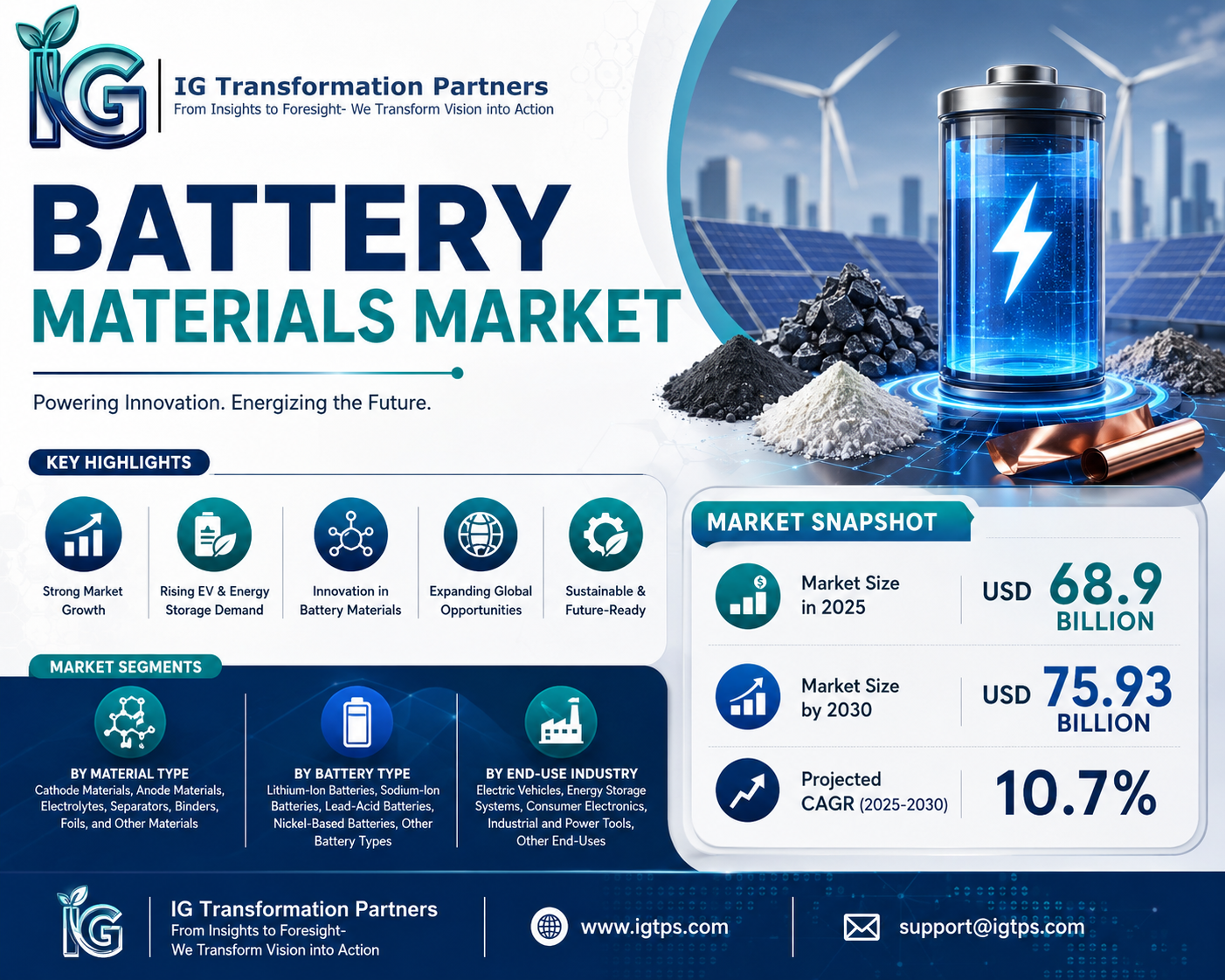
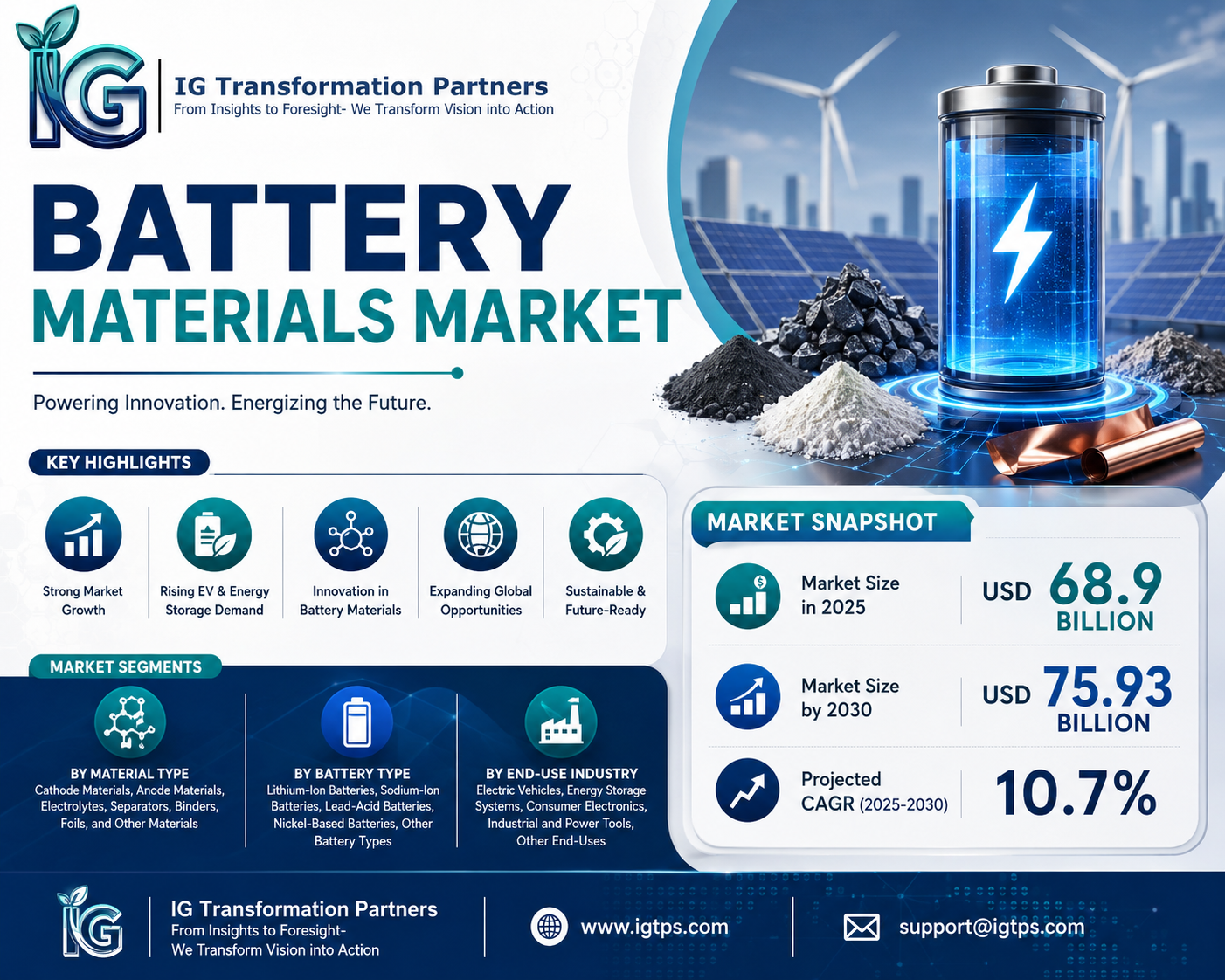
Understanding the Battery Materials Market
Battery materials are specialized raw materials and components used in the manufacturing of rechargeable and non-rechargeable batteries. These materials include cathode materials, anode materials, electrolytes, separators, binders, conductive additives, and specialty chemicals that determine battery performance and reliability.
The Battery Materials Market encompasses the extraction, processing, manufacturing, and distribution of materials used in lithium-ion batteries, solid-state batteries, lead-acid batteries, nickel-based batteries, and emerging energy storage technologies.
Key materials include lithium, cobalt, nickel, manganese, graphite, silicon, aluminum, copper, and advanced conductive compounds. These materials play a vital role in determining battery capacity, charging speed, lifespan, thermal stability, and overall energy efficiency.
As battery technologies continue to evolve, demand for advanced materials capable of supporting higher performance and greater sustainability is increasing across global markets.
Key Growth Drivers of the Battery Materials Market
Rapid Expansion of Electric Vehicle Production
One of the primary drivers of the Battery Materials Market is the accelerating adoption of electric vehicles worldwide. Governments are implementing stringent emissions regulations, offering incentives for EV purchases, and investing heavily in charging infrastructure development.
Electric vehicle manufacturers require large quantities of battery materials to support growing production volumes. High-performance cathode and anode materials are essential for improving vehicle range, reducing charging times, and enhancing battery durability.
As global automotive manufacturers continue transitioning toward electrification, demand for battery materials is expected to rise significantly throughout the forecast period.
Increasing Renewable Energy Storage Demand
The growing deployment of solar and wind energy systems is creating substantial demand for advanced battery storage solutions. Renewable energy generation often requires efficient storage systems to address intermittency challenges and ensure stable power supply.
Battery materials are critical for the production of grid-scale energy storage systems that enable effective energy management and distribution. As countries invest in renewable energy infrastructure, demand for battery materials is expected to expand considerably.
Growth in Consumer Electronics
Consumer electronics remain a major source of demand for battery materials. Smartphones, laptops, tablets, wearable devices, wireless headphones, and smart home technologies all rely on high-performance rechargeable batteries.
The increasing popularity of connected devices and digital technologies continues to drive the need for advanced battery materials capable of supporting compact, lightweight, and long-lasting power solutions.
Government Support and Sustainability Initiatives
Governments worldwide are actively supporting battery manufacturing and energy storage development through policy incentives, research funding, and industrial investment programs.
National strategies focused on energy security, carbon neutrality, and sustainable transportation are encouraging investments in battery production facilities and raw material supply chains. These initiatives are creating favorable conditions for long-term market growth.
Technological Advancements Supporting Market Growth
Continuous innovation in battery chemistry and materials science is transforming the Battery Materials Market. Researchers are developing advanced cathode materials, silicon-based anodes, solid electrolytes, and next-generation battery architectures designed to improve performance and safety.
The emergence of solid-state batteries represents a major technological advancement with the potential to deliver higher energy density, faster charging capabilities, and enhanced safety compared to conventional lithium-ion batteries.
Artificial intelligence, automation, and advanced manufacturing technologies are also improving battery material production processes, quality control systems, and supply chain efficiency. These innovations help manufacturers optimize performance while reducing production costs.
Additionally, recycling technologies are gaining importance as companies seek to recover valuable battery materials and support circular economy initiatives.
Market Segmentation Analysis
The Battery Materials Market can be segmented based on material type, battery type, application, and geographical region.
Based on material type, cathode materials account for a significant share due to their direct impact on battery performance and energy density. Anode materials, electrolytes, separators, conductive additives, and binders also represent important market segments.
From an application perspective, electric vehicles represent the largest and fastest-growing segment. Other major applications include consumer electronics, renewable energy storage systems, industrial equipment, telecommunications, and medical devices.
The increasing adoption of advanced battery technologies across multiple industries continues to diversify market opportunities and drive innovation.
Regional Market Insights
North America
North America represents a significant market driven by increasing electric vehicle adoption, renewable energy investments, and expanding domestic battery manufacturing initiatives.
The United States is investing heavily in battery supply chain development and critical mineral processing to strengthen energy security and reduce dependence on imports. Growing investments in gigafactories and energy storage projects are expected to support continued market growth.
Europe
Europe maintains a strong market position due to aggressive climate policies, growing electric vehicle production, and increasing investments in sustainable energy infrastructure.
Countries such as Germany, France, and the United Kingdom are supporting battery manufacturing ecosystems through public-private partnerships, research programs, and industrial development initiatives.
The region's focus on decarbonization and clean transportation continues to drive demand for battery materials.
Asia-Pacific
Asia-Pacific dominates the Battery Materials Market and is expected to maintain the fastest growth rate during the forecast period. China, Japan, South Korea, and India are major contributors due to their strong battery manufacturing capabilities and extensive supply chain networks.
The region benefits from large-scale production facilities, abundant industrial capacity, and increasing demand for electric vehicles and consumer electronics. Ongoing investments in battery innovation and manufacturing expansion further strengthen market opportunities.
Challenges in the Battery Materials Market
Despite strong growth prospects, the market faces several challenges. Supply chain vulnerabilities, raw material price volatility, geopolitical risks, and environmental concerns associated with mining activities can impact market stability.
Manufacturers must also address sustainability challenges, ethical sourcing requirements, and increasing regulatory scrutiny regarding environmental and social responsibility.
The growing demand for critical minerals such as lithium, cobalt, and nickel may create supply constraints that require strategic investments in resource development and recycling infrastructure.
Emerging Opportunities in the Market
The Battery Materials Market presents substantial opportunities through advancements in solid-state batteries, battery recycling technologies, energy storage systems, and sustainable material development.
The growing adoption of electric mobility, smart grids, renewable energy integration, and industrial electrification is expected to create long-term demand for innovative battery materials.
Additionally, the development of alternative chemistries and next-generation energy storage technologies may unlock new commercial opportunities while reducing dependence on scarce raw materials.
Role of IG Transformation Partners in Market Intelligence
As the Battery Materials Market continues to evolve through technological innovation, sustainability initiatives, and changing supply chain dynamics, organizations require accurate market intelligence to support strategic decision-making.
IG Transformation Partners provides comprehensive market research, competitive intelligence, technology assessment, industry forecasting, and strategic consulting services that help businesses identify emerging opportunities and navigate complex market environments. Reliable market insights enable stakeholders to evaluate investment potential, understand competitive landscapes, and develop effective growth strategies.
Future Outlook of the Battery Materials Market
The future of the Battery Materials Market remains highly promising due to increasing global electrification, renewable energy deployment, and advancements in battery technologies.
Future growth will likely be supported by rising electric vehicle adoption, battery manufacturing expansion, next-generation energy storage solutions, and continued investments in critical mineral supply chains.
Companies focusing on innovation, sustainability, recycling technologies, and supply chain resilience are expected to gain significant competitive advantages in the evolving market landscape.
Conclusion
The Battery Materials Market is becoming increasingly important as the global economy transitions toward clean energy, electric mobility, and digital technologies. Rising demand for energy storage solutions, expanding electric vehicle production, and continuous advancements in battery technology are driving strong market growth.
The market presents significant opportunities for material suppliers, battery manufacturers, investors, technology developers, and energy companies seeking to participate in the rapidly expanding energy storage ecosystem. As sustainability and electrification continue to reshape industries worldwide, the Battery Materials Market is expected to experience sustained long-term growth.
For detailed market insights, trends, forecasts, and strategic analysis, explore the full report here:
https://www.igtps.com/report/battery-material-market
FAQs
1. What is the Battery Materials Market?
The market includes the production, processing, and supply of materials used in battery manufacturing, including cathodes, anodes, electrolytes, separators, and conductive additives.
2. What factors are driving market growth?
Major drivers include electric vehicle adoption, renewable energy expansion, consumer electronics demand, battery technology innovation, and government sustainability initiatives.
3. Which materials are commonly used in batteries?
Common battery materials include lithium, cobalt, nickel, manganese, graphite, silicon, copper, aluminum, and specialized chemical compounds.
4. Which region dominates the market?
Asia-Pacific dominates the market due to strong battery manufacturing capabilities and growing electric vehicle production.
5. What challenges does the market face?
Key challenges include raw material supply constraints, price volatility, environmental concerns, regulatory compliance, and supply chain risks.
6. Why are battery materials important?
Battery materials determine energy density, charging performance, lifespan, safety, and overall efficiency of battery systems.
7. What is the future outlook for the market?
The market is expected to grow steadily due to electrification trends, renewable energy investments, battery innovation, and increasing global demand for energy storage solutions.

 COMMENT
 FACBOOK


Comments (0)